- Hormonal acne is driven by androgen activity, not poor hygiene or “dirty skin”.
- Chin and jawline breakouts may suggest hormonal acne, but not always.
- Topical skincare may reduce inflammation without addressing the hormonal driver beneath it.
- Hormonal acne treatment often progresses from topical to oral to procedural care.
- Lasers and peels should follow proper diagnosis, not replace it.
- A dermatologist consultation helps clarify whether hormones are contributing to persistent acne.
Acne affects up to 88% of adolescents in Singapore, and for many women, the breakouts persist well into adulthood. Adult acne is often linked to hormonal changes, so it is more common among women and is also known as hormonal acne.
One large study found that acne affected roughly 50% of women in their twenties, 35% in their thirties, and more than 25% in their forties.
Persistent adult acne can be harder to control with skincare products alone, which is what drives patients in Singapore to seek hormonal acne treatment from a dermatologist.
Ahead, we’ll unpack the patterns, causes, and treatment approaches behind hormonal acne.
What Hormonal Acne Actually Is (and How It's Different from Other Acne)
Hormonal acne refers to acne that is strongly influenced by androgens, the hormones that stimulate oil production in the skin. As oil production increases, dead skin cells can build up more easily inside the pore, leading to blockage and inflammation, a process known as follicular hyperkeratinisation. The breakouts also tend to flare cyclically, often around menstruation, stress, or other hormonal shifts.
For many women, this acne looks different from the smaller blackheads and clogged pores they remember from adolescence. Adult acne linked to hormonal changes tends to sit deeper beneath the skin and cluster around the chin, jawline, and lower face. Some dermatologists may also describe this pattern as androgenic acne because these areas contain oil glands that are especially sensitive to hormones.
At the same time, not every breakout in adulthood is necessarily hormonal. Some people mainly develop comedonal acne, where blocked pores appear as blackheads and whiteheads, while others experience more inflammatory acne involving Cutibacterium acnes, the bacteria associated with red papules and pustules.
Conditions such as Malassezia folliculitis, sometimes called “fungal acne,” can also resemble acne closely despite having a different underlying cause. Cystic acne, meanwhile, refers to deeper nodular inflammation that can increase the risk of scarring.
These distinctions are not always obvious outside a dermatologist’s clinic, and the same person can experience several acne patterns at once.
How to Tell if Your Acne Might Be Hormonal: Six Signs Worth Knowing
Hormonal acne can overlap with many other forms of acne, which is one reason it is often difficult to identify through online quizzes or social media alone. Still, dermatologists tend to look for certain recurring patterns that suggest hormones may be contributing to the breakouts.
1. Breakouts Cluster Around the Lower Face
One recognisable sign that it may be hormonal acne is where the breakouts appear. If they’re linked to hormonal fluctuations, acne typically shows up around the chin, jawline, lower cheeks, and sometimes the neck. Some patients notice that the same areas flare repeatedly, even when the rest of the face remains relatively clear.
This pattern is different from the more forehead-centred congestion commonly associated with adolescent acne.
2. Acne Flares Up in Cycles
Some people notice that their skin worsens at roughly the same point each month. In women, the acne may flare before menstruation, around ovulation, or during perimenopause. Others describe periods where the skin briefly settles before another cycle of inflammation begins again.
The timing itself is not diagnostic, but recurring cyclical flares are one reason dermatologists may suspect a hormonal component.
2. Acne Flares Up in Cycles
Some people notice that their skin worsens at roughly the same point each month. In women, the acne may flare before menstruation, around ovulation, or during perimenopause. Others describe periods where the skin briefly settles before another cycle of inflammation begins again.
The timing itself is not diagnostic, but recurring cyclical flares are one reason dermatologists may suspect a hormonal component.
3. Pimples Feel Deeper and More Tender
Not all acne lesions behave the same way. Hormonal acne is often associated with deeper papules and nodules that feel tender to the touch and linger beneath the skin for longer periods.
By contrast, comedonal acne tends to present more as superficial blackheads and whiteheads. Some patients with hormonal acne describe feeling soreness beneath the skin even before a visible bump fully develops.
4. Acne That Begins in Adulthood
Adult-onset acne is another pattern dermatologists commonly see. Some patients had relatively mild acne as teenagers and only experienced persistent breakouts after 25. Others develop acne for the first time in adulthood despite previously having clear skin.
Because many people associate acne with adolescence, later-onset breakouts are often dismissed initially as stress, poor skincare, or isolated flare-ups.
5. Other Hormonal Symptoms Are Present
In some patients, acne appears together with symptoms linked to androgen excess, including increased facial hair growth, scalp hair thinning, or irregular menstrual cycles.
These symptoms do not automatically confirm a hormonal disorder, but they may warrant further medical evaluation, particularly when they occur alongside persistent acne.
6. Skincare Products Stop Working
Many patients eventually notice that exfoliants, spot treatments, and acne cleansers seem to produce only temporary improvement. The breakouts settle briefly, then return to the same areas again.
In some cases, stronger and more frequent active ingredients can end up irritating the skin barrier further, especially in patients already prone to post-inflammatory pigmentation. This is why barrier repair may be the first course of treatment.
None of these patterns alone can diagnose hormonal acne, and not everyone with adult acne will experience all six signs together. But when several patterns repeatedly overlap, it may be worth discussing them with a dermatologist. Book an appointment at DermAlly to confirm or rule out hormonal acne based on what you’re experiencing.
What Actually Causes Hormonal Acne: The Science, Plainly
So, what causes hormonal acne? At its core, hormonal acne is driven by androgens, the group of hormones that includes testosterone and dihydrotestosterone (DHT). These hormones bind to receptors in the sebaceous glands attached to hair follicles, stimulating the glands to produce more sebum, or oil.
As sebum production increases, dead skin cells become trapped more easily within the follicle. The pore becomes blocked, Cutibacterium acnes bacteria multiply more readily inside the trapped environment, and inflammation follows.
The underlying process is broadly similar across many patients. What differs is the hormonal context triggering the flare.
Here are some of the common causes of hormonal acne.
Menstrual Cycles
For some women, acne becomes more active during the second half of the menstrual cycle, also known as the luteal phase. During this period, shifting progesterone and oestrogen levels can alter oil production and inflammatory signalling within the skin.
This is why some patients notice that the skin appears relatively stable for part of the month, only for inflamed breakouts to re-emerge predictably before menstruation.
Polycystic Ovary Syndrome (PCOS)
Hormonal acne can also occur alongside polycystic ovary syndrome (PCOS), a condition associated with increased androgen activity and insulin resistance. In these patients, the acne may become more persistent and inflammatory because the sebaceous glands remain under stronger hormonal stimulation over time.
PCOS acne sometimes appears together with irregular periods, increased facial hair growth, or scalp hair thinning, although not every patient experiences all of these symptoms. This is one reason treatment for PCOS-related acne often requires looking beyond the breakouts themselves and considering the broader hormonal pattern driving the inflammation.
Perimenopause
Perimenopausal acne develops within a different hormonal environment. As oestrogen levels gradually decline, androgens can exert a relatively stronger influence on the sebaceous glands even without a major increase in testosterone levels.
This relative androgen dominance is one reason some women begin developing breakouts again during their forties or fifties, despite previously having stable skin.
Stress and Cortisol
Stress affects the skin through a different hormonal pathway. When stress levels rise, the hypothalamic-pituitary-adrenal (HPA) axis stimulates cortisol production, which can increase sebaceous gland activity and amplify inflammation in acne-prone skin.
This does not mean stress directly “causes” hormonal acne, but it may worsen underlying inflammatory patterns that are already present.
Diet is more complicated. Some dermatology literature has found associations between acne and dietary patterns such as high-glycaemic-load diets or dairy intake in certain patients. But the relationship remains nuanced, and diet alone is rarely the sole explanation for persistent hormonal acne.
Why Topical Skincare Alone Often Isn't Enough for Hormonal Acne
Many patients with hormonal acne eventually arrive at the same frustrating conclusion: the skincare products seem to help, until they suddenly do not anymore.
This does not mean topical skincare is useless. In dermatology, topical treatments still play an important role in managing acne.
Ingredients such as retinoids help regulate keratinisation inside the pore, reducing the buildup of dead skin cells that contribute to blockage.
Acids such as salicylic acid for hormonal acne can help exfoliate within the follicle and reduce congestion, while antibacterial ingredients may reduce Cutibacterium acnes activity on the skin surface. Other topical treatments focus primarily on calming inflammation.
But hormonal acne behaves differently because the inflammation is being influenced internally by hormonal signalling at the level of the sebaceous gland. A retinoid for hormonal acne may help reduce clogged pores and inflammatory lesions, but it does not directly stop androgen activity within the oil gland itself.
This is one reason many patients find themselves repeatedly escalating their hormonal acne skincare routines. When one active ingredient stops working, another is added. Then another. Acids are layered with exfoliants, drying spot treatments, cleansing brushes, and barrier-stripping routines that leave the skin increasingly irritated.
In some patients, the inflammation from over-treatment becomes difficult to distinguish from the acne itself. The skin barrier becomes disrupted, redness lingers longer after breakouts heal, and post-inflammatory pigmentation becomes more pronounced, particularly in darker skin tones common in Singapore.
At DermAlly, this is one reason dermatologists often approach persistent acne by first assessing the overall inflammatory state of the skin rather than simply increasing the number of active ingredients. It is also why calming the skin barrier is sometimes a necessary first step before more aggressive treatment approaches are introduced.
How a Dermatologist Diagnoses Hormonal Acne
A hormonal acne diagnosis usually begins long before any treatment is prescribed. In dermatology, the consultation is often less about finding a single “acne trigger” and more about understanding the overall pattern behind the breakouts.
Much of the assessment begins with history-taking. A hormonal acne dermatologist may ask when the acne first started, whether the flares appear cyclically, and if the breakouts changed after starting or stopping hormonal contraceptives.
Family history can also matter, particularly when close relatives experienced persistent adult acne, PCOS, or other hormonally influenced skin conditions.
Other questions may seem unrelated to the skin at first. Weight fluctuations, menstrual irregularities, medication use, stress patterns, and scalp or hair changes can all provide clues about whether androgen activity may be contributing to the inflammation.
The physical examination matters just as much. Dermatologists often assess where the acne appears, how inflamed the lesions are, whether deeper nodules are present, and if there are visible signs of androgen excess, such as increased facial hair growth or scalp hair thinning.
Not every patient requires bloodwork. Hormonal testing is usually decision-led rather than routine. But when symptoms suggest a broader endocrine component, blood tests may sometimes be used to evaluate testosterone levels, dehydroepiandrosterone sulphate (DHEAS), luteinising hormone (LH), follicle-stimulating hormone (FSH), fasting insulin, or thyroid function where relevant.
This diagnosis-led approach is important because persistent acne is not always driven by the same underlying process.
At DermAlly, our dermatologists often assess the broader inflammatory and hormonal context first before deciding whether topical skincare, medication, hormonal management, or a procedural approach makes the most sense for the individual patient. Book an appointment with us for a personalised treatment plan.
Treatment Options for Hormonal Acne: The Laddered Approach
Dermatologists do not usually treat hormonal acne with a single “miracle” product. Instead, treatment tends to follow a step-by-step approach, beginning with lower-intensity options before escalating only when necessary. The right hormonal acne treatment plan depends on several factors, including how inflammatory the acne is, whether scarring or post-inflammatory pigmentation is developing, how the skin has responded to previous treatments, and broader patient considerations such as pregnancy plans or underlying hormonal conditions.
In practice, this often means combining different treatments, some of which focus on reducing pore blockage and inflammation at the skin level, while others aim to reduce the hormonal signalling driving the acne beneath the surface.
Topical Prescription Options
Prescription topical treatments are often the first rung in the treatment ladder, particularly for mild to moderate hormonal acne or as part of a broader combination plan.
Topical retinoids such as adapalene and tretinoin help regulate keratinisation inside the pore. In dermatology, a topical retinoid is often considered one of the foundational treatments for acne because it targets the early stages of lesion formation.
Topical antibiotics such as clindamycin may also be used to reduce inflammatory Cutibacterium acnes activity within the skin. Because antibiotic resistance is an increasing concern in dermatology, these medications are commonly combined with benzoyl peroxide rather than being used alone.
Newer prescription options include topical clascoterone, an anti-androgen medication applied directly to the skin. Unlike traditional topical acne treatments that mainly target pore blockage or bacteria, clascoterone acts more directly on androgen signalling within the sebaceous gland.
Azelaic acid occupies a slightly different role. It may help reduce inflammation, improve post-inflammatory pigmentation, and regulate abnormal keratinisation while generally being gentler than many exfoliating acids.
At the same time, topical-only treatment is not always sufficient for true hormonally driven acne. In many patients, prescription acne treatment in Singapore involves using topical medications to reduce inflammatory load while oral therapies address the hormonal component more directly.
Oral Medication Options
When acne becomes more persistent, inflammatory, or resistant to topical treatment alone, dermatologists may consider oral medication options.
Combined oral contraceptives are sometimes used in women without contraindications because certain oestrogen-progestin combinations can reduce androgen activity and lower sebaceous gland stimulation over time. Oral contraceptive acne management is usually considered within the broader context of the patient’s hormonal history and medical profile.
Spironolactone for acne is another commonly discussed option in adult women. Originally developed as a blood pressure medication, spironolactone also has anti-androgen effects that may reduce hormonally driven oil production. Because the medication can affect electrolyte balance and blood pressure, dermatologists may recommend monitoring depending on the patient’s medical history and dosage.
Oral antibiotics are still used in dermatology practice, but usually as shorter transitional courses rather than indefinite treatment. Their primary role is to reduce inflammatory bacterial activity while longer-term maintenance strategies take effect. Concerns surrounding antibiotic resistance have made prolonged standalone antibiotic use less favourable in modern acne management.
For severe, scarring, or treatment-resistant acne, dermatologists may sometimes consider isotretinoin. In Singapore, isotretinoin remains a tightly monitored prescription medication because it affects multiple pathways involved in acne formation, including sebaceous gland activity and keratinisation.
The decision to begin isotretinoin is usually made carefully between the patient and the dermatologist. The medication requires monitoring, including blood tests in many patients, and it carries significant teratogenic risk. Women of childbearing potential generally require contraception while taking isotretinoin because exposure during pregnancy can cause serious fetal abnormalities.
Our dermatologists generally approach oral medication as part of a broader long-term management plan rather than a standalone solution. If you’re considering oral medication as a hormonal acne treatment, speak to us for a professional assessment first.
In-Clinic Procedures and Lasers
Procedural treatments occupy a different role in hormonal acne management. Rather than addressing the hormonal driver itself, these treatments are usually used to reduce inflammation, manage residual marks, or improve acne-related texture changes after the underlying acne becomes more controlled.
Chemical peels using ingredients such as salicylic acid or mandelic acid may help improve surface congestion, post-inflammatory pigmentation, and uneven texture. Intralesional steroid injections are sometimes used for individual large inflammatory nodules to reduce swelling more quickly.
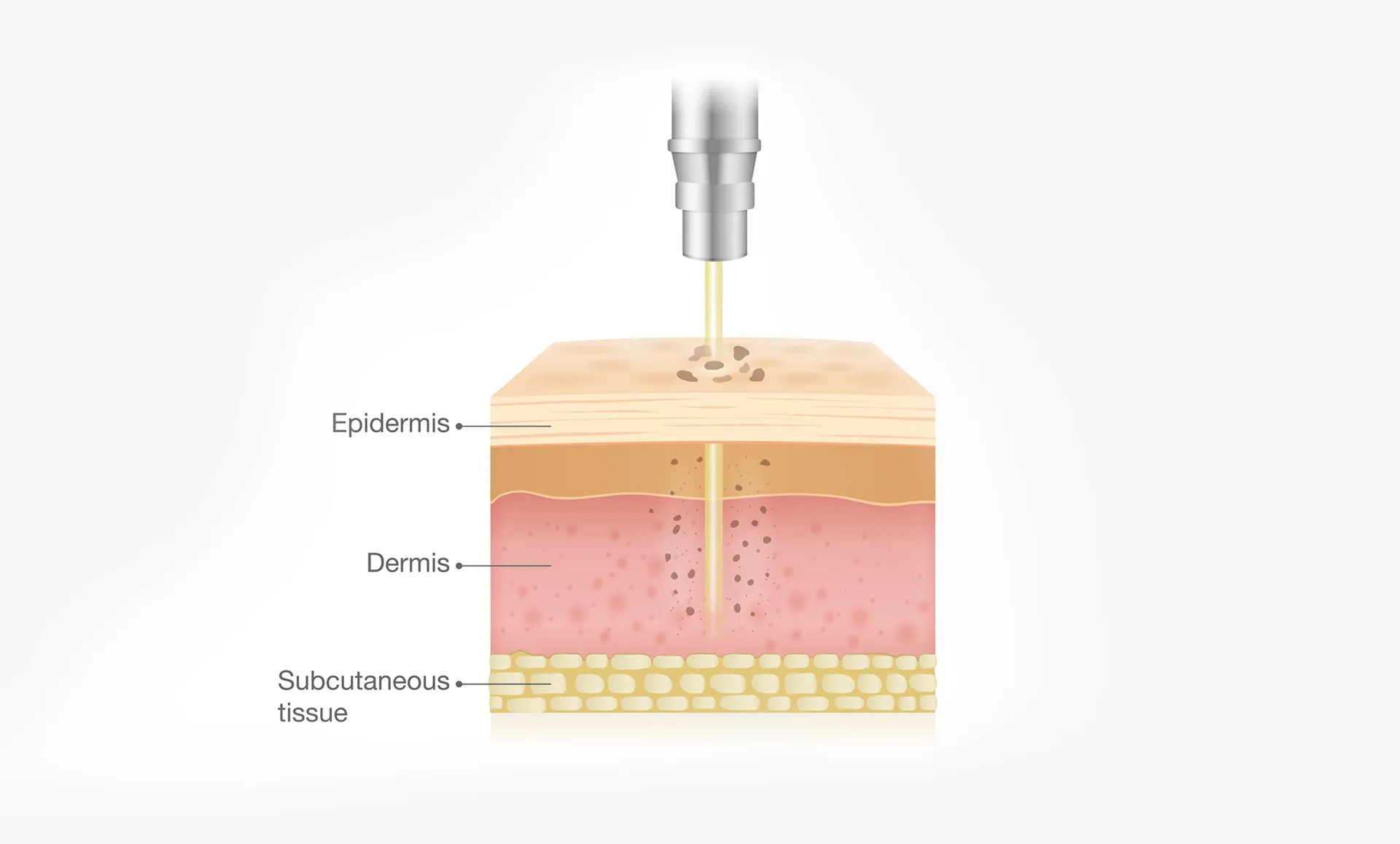
Light- and laser-based treatments are usually considered adjunctive rather than primary therapy for acne. Some lasers may help reduce residual redness or pigmentation after inflammatory acne settles, while others are for acne scar treatment and textural remodelling.
For example, pico laser and RF Gold microneedling are typically used as acne scar treatments, addressing pigmentation such as acne marks, as well as scars. Other modalities, including yellow laser treatments, may target persistent redness after inflammatory acne improves.
But lasers do not “switch off” the hormonal process itself. They help manage the visible aftermath of inflammation, including post-inflammatory pigmentation, redness, and acne scarring, after the underlying hormonal acne is more stable.
Hormonal Acne Across Different Life Stages
Hormonal acne does not look the same at every age. The underlying biology may overlap, but the way the acne presents often changes alongside shifts in hormone levels, skin physiology, and overall inflammatory activity.
Teenagers
In adolescence, hormonal acne is usually tied to the androgen surge that occurs during puberty. As sebaceous glands become more active, oil production rises sharply, making clogged pores and inflammatory breakouts more common.
Teenage acne often affects the forehead, nose, and upper cheeks more diffusely than adult patterns do. For some patients, the acne gradually improves after puberty. For others, the inflammatory tendency persists into adulthood.
Adult Women in Their Twenties and Thirties
Adult female acne is one of the most recognisable hormonal acne patterns seen in dermatology clinics. In this group, the breakouts are often linked to cyclical hormonal fluctuations and may worsen around menstruation.
The acne itself also tends to behave differently from adolescent acne. Many women describe recurrent inflammatory lesions concentrated around the lower face, especially during periods of stress, hormonal transition, or disrupted sleep.
Women With PCOS
PCOS acne often follows a more chronic and hormonally driven course. The inflammation may become more persistent, deeper, and more cystic compared with ordinary comedonal acne.
Because PCOS involves broader endocrine pathways beyond the skin itself, management sometimes requires coordination between dermatology and hormonal evaluation, particularly when acne appears alongside irregular menstrual cycles, hirsutism, or scalp hair thinning.
Perimenopausal Women
Menopausal acne and perimenopausal acne develop within a different hormonal environment altogether. As oestrogen levels decline with age, androgens can exert a relatively stronger influence on the sebaceous glands.
At the same time, the skin barrier itself gradually becomes thinner and more reactive. This combination can make breakouts feel especially frustrating for women who had relatively stable skin for years before entering perimenopause.
Men
Hormonal acne in men is discussed less often, but hormonally influenced acne can still occur in male patients. In men, the pattern is often more persistent and may involve the jawline, beard area, chest, shoulders, or back.
Because testosterone levels are naturally higher in men, the acne does not always present with the same cyclical pattern commonly seen in women. Instead, the inflammation may appear more continuously active over time.
When to See a Dermatologist for Hormonal Acne
Not every breakout requires specialist care. Mild acne that settles with simple skincare routines may never need medical treatment at all.
But there are certain situations where it becomes reasonable to consult a dermatologist rather than continuing to experiment with over-the-counter products alone.
One common threshold is persistence. Acne that continues well past the teenage years, particularly after 25, often behaves differently from adolescent breakouts. If the inflammation keeps recurring despite consistent skincare, it may be worth discussing with a dermatologist for acne in Singapore.
Painful nodules and cystic lesions are another sign that the acne may be becoming more inflammatory beneath the surface. These deeper lesions are also more likely to leave post-inflammatory pigmentation or permanent textural scarring after they heal.
Some patients first seek help not because of the acne itself, but because marks linger long after the breakouts settle. In darker skin tones, post-inflammatory hyperpigmentation can sometimes become more distressing than the active acne.
Acne that appears together with irregular menstrual cycles, increased facial hair growth, or scalp hair thinning may also warrant further evaluation, particularly when hormonal influences are suspected.
Emotional impact matters too. Persistent acne can affect confidence, social interactions, and daily routines in ways that are difficult to quantify clinically. Many patients describe structuring their schedules, makeup habits, or even work presentations around active breakouts.
Knowing when to see a dermatologist in Singapore for acne is not about treating every pimple as a medical problem. But when the acne becomes persistent, painful, scarring, or emotionally exhausting, a more structured evaluation may help clarify what is actually driving the inflammation beneath the surface.
Patients interested in discussing treatment for hormonal acne can book an appointment with one of our dermatologists.
How DermAlly's Dermatologists Approach Hormonal Acne
At DermAlly Singapore, hormonal acne treatment is approached as a pattern-based condition. The consultation usually begins with a detailed history and skin examination, including the timing of breakouts, prior treatment history, hormonal symptoms, medication use, and the overall inflammatory behaviour of the skin.
Our dermatologists then discuss hormonal acne treatment options based on the severity and behaviour of the acne itself. For some patients, treatment may focus more heavily on prescription medication and hormonal management. For others, the priority may be reducing post-inflammatory pigmentation, calming an impaired skin barrier, or addressing residual acne scarring after inflammation improves.
Sequencing also matters. In patients with significant irritation from repeated exfoliation or overuse of active ingredients, stabilising the skin barrier may sometimes become the first step before introducing stronger procedural or prescription-based treatment approaches.
When symptoms suggest a broader endocrine component, referral for further hormonal evaluation may also be considered. This can be relevant in patients with suspected PCOS, irregular menstrual cycles, or other signs of androgen excess.
DermAlly’s team includes Ministry of Health (MOH)-accredited dermatologists, including doctors with prior experience at the National Skin Centre (NSC).
Frequently Asked Questions About Hormonal Acne
Does hormonal acne ever go away on its own?
Can birth control help hormonal acne?
Is spironolactone safe for long-term use?
Why does my acne keep coming back on my chin and jawline?
How long does it take for hormonal acne treatment to start working?v
Can men get hormonal acne?
Key Takeaway
- Hormonal acne can appear differently across puberty, adulthood, PCOS, and perimenopause, which is why treatment in Singapore is often personalised.
- Cyclical breakouts and adult-onset acne may point toward a hormonal component rather than ordinary teenage acne.
- Over-exfoliating already inflamed skin can worsen irritation and post-inflammatory pigmentation, especially in darker skin tones.
- Hormonal acne often overlaps with other acne patterns, including comedonal and cystic acne.
- Persistent acne that affects confidence, comfort, or daily life may be a reasonable point to book a dermatologist consultation.
Start with a Hormonal Acne Assessment by a Dermatologist
At DermAlly Singapore, hormonal acne treatment is approached by first understanding the pattern behind the breakouts before deciding which treatments make the most sense for the individual patient. Book a dermatologist consultation to get started.


Our articles are written and reviewed by Dr. Coni Liu (MRCS, FAMS), Dr. Heng Jun Khee (MRCP, FAMS), and Dr. Cheng Hui Mei (FAMS), Ministry of Health-accredited Consultant Dermatologists at DermAlly.
All three are Fellows of the Academy of Medicine (Dermatology) and previously served as Consultants at the National Skin Centre (NSC), bringing extensive experience in medical, surgical, and aesthetic dermatology. They are committed to making expert-led skin education accessible, practical, and clear, helping patients look and feel their best through evidence-based care rooted in science and compassion.