Persistent back acne is often more complex than many patients in Singapore initially realise. What appears to be routine body acne may sometimes involve truncal acne, acne mechanica from sweat and friction, or even conditions such as fungal folliculitis on the back that require a completely different treatment approach.
Back, chest, and shoulder acne occurs in approximately 40–52% of patients with facial acne but is consistently underreported and undertreated largely because it is hidden under clothing. Truncal acne is structurally and clinically distinct from facial acne and requires a different treatment approach.
DermAlly’s MOH-accredited consultant dermatologists provide diagnosis, medical-first treatment, and structured scar-prevention strategies for back and body acne, calibrated for Asian skin and Singapore’s climate. For patients looking for a dermatologist for back acne in Singapore, DermAlly provides medically led assessment and staged treatment planning for persistent chest, shoulder, and body breakouts, including cases requiring more advanced “bacne” treatment in Singapore or scar-focused management.
Reviewed By:
The back generally has thicker skin than the face, with greater dermal thickness in many areas of the upper back and shoulders. The upper back is also a sebaceous-rich region, meaning it contains a high concentration of oil glands and hair follicles that can become clogged and inflamed.
Together with sweat, friction, and occlusion from clothing or exercise, this helps explain why truncal acne commonly affects the chest, shoulders, and back.
Back skin also tends to heal more slowly. Inflammatory lesions may remain active for longer periods, allowing inflammation to extend deeper into the skin. This partly explains why body acne is more strongly associated with persistent pigmentation and long-term textural scarring.
In Asian skin types (Fitzpatrick III–V), the back is considered one of the highest-risk anatomical sites for hypertrophic and keloid scar formation. This is particularly relevant for patients dealing with recurrent inflammatory lesions or untreated back acne in Singapore’s humid climate, where perspiration and occlusive clothing can further aggravate breakouts.
Early treatment is therefore prioritised not only to reduce active inflammation but also to lower the risk of permanent back acne scars, including raised keloids and post-inflammatory hyperpigmentation.
These anatomical differences also affect treatment selection. Products designed for facial acne do not always translate well to truncal acne. Standard over-the-counter facial serums and spot treatments may not penetrate effectively enough into thicker truncal skin, particularly in more established or widespread cases.
This is why dermatologists treating back and body acne in Singapore often use different formulations, delivery methods, and procedural settings than for facial treatments.
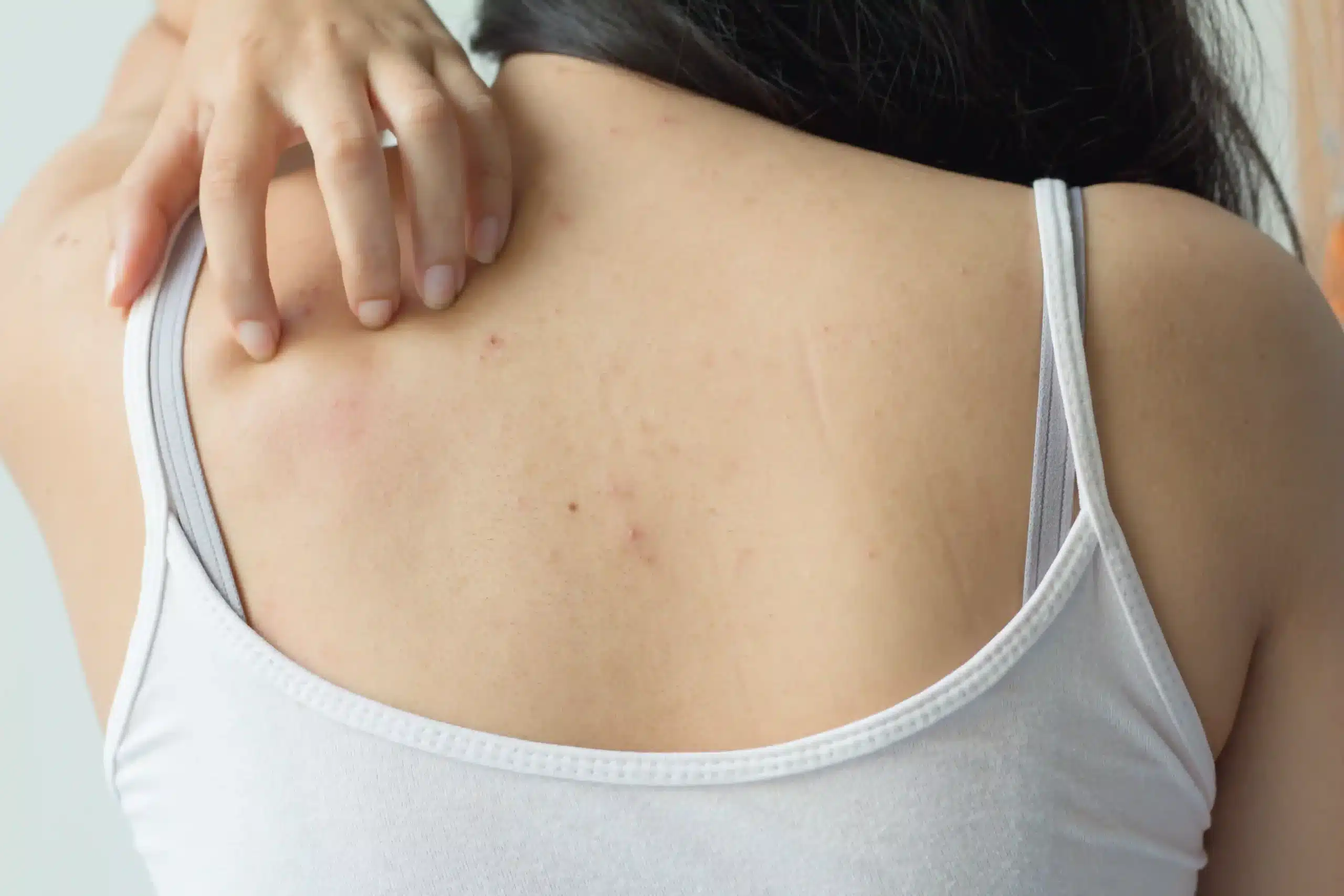
Many patients with back acne in Singapore notice that their skin worsens during periods of heavy sweating, frequent exercise, or prolonged heat exposure. Climate and lifestyle do not directly “cause” acne on their own, but they can create conditions that aggravate already acne-prone skin, particularly across the back, chest, and shoulders.
Singapore’s year-round humidity, typically between 75% and 85%, creates a persistently warm, moist environment on the skin. Daily perspiration, repeated sweating, and frequent showering can contribute to follicular occlusion and bacterial colonisation, especially in patients already prone to truncal acne.
The upper back and shoulders are particularly vulnerable because they contain a high density of hair follicles and sebaceous glands. When sweat, heat, and occlusion are combined, inflammatory back pimples may become more persistent and widespread.
Tight gym clothing and synthetic fabrics such as Lycra and polyester can trap sweat and heat against the skin for prolonged periods. This creates friction and pressure over acne-prone areas, particularly during exercise.
Dermatologists refer to this as acne mechanica, a form of acne aggravated by repetitive rubbing, occlusion, and sweat retention. Common trigger areas include regions beneath sports bras, compression wear, shoulder straps, and tight athleisure clothing.
Haircare products are another overlooked contributor to body acne and shoulder breakouts. During showering, shampoo, conditioner, and styling product residue often run down the back before being fully rinsed away.
In some individuals, ingredients such as silicones and sulphate-based cleansers, including sodium lauryl sulphate (SLS) and sodium laureth sulphate (SLES), may contribute to clogged follicles and irritation along the upper back and shoulders.
Repeated mechanical friction can worsen inflamed lesions. Backpacks, bra straps, fitted collars, and prolonged pressure against seat backs may repeatedly irritate acne-prone skin throughout the day.
For patients with ongoing body acne in Singapore’s humid climate, this chronic friction may prolong inflammation and increase the risk of lingering pigmentation changes, such as post-inflammatory hyperpigmentation on the back.
Diet is unlikely to be the sole cause of acne, but certain dietary patterns have been associated with acne flares in some patients. Higher glycaemic-load foods and drinks, including sweetened beverages and refined carbohydrates, may worsen inflammation in susceptible individuals.
High dairy intake, particularly skim milk, has also been linked to acne in some studies. Among physically active patients, whey protein and creatine supplementation are commonly reported triggers for worsening chest and shoulder acne, particularly when combined with perspiration, friction, and occlusive workout clothing.
Truncal acne develops through the same core biological mechanisms as facial acne. Acne on the back follows the same core biological process as facial acne. Dermatologists generally describe this through four interacting factors:
In simple terms, acne begins when oil and dead skin cells accumulate within the hair follicle, creating a blockage. This allows bacteria to proliferate and trigger inflammation within the skin.
On the back and chest, these inflammatory processes often involve larger surface areas and can become more extensive than facial acne alone. Lesions also tend to sit deeper within thicker truncal skin, which may contribute to longer-lasting inflammation and a greater risk of scarring.

Hormones play a major role in many patients with persistent body acne and recurrent back pimples. Androgens such as testosterone and dihydrotestosterone (DHT) stimulate sebaceous gland activity, increasing oil production within the follicles.
This partly explains why back acne can persist into adulthood, particularly in men. In women, hormonal fluctuations linked to the menstrual cycle, polycystic ovary syndrome (PCOS), and certain contraceptives may contribute to cyclical flares affecting the face, chest, shoulders, and back. Patients with suspected hormonal patterns may benefit from further assessment alongside broader management of hormonal acne.
Genetics also influences acne severity. Patients with a family history of inflammatory acne are generally more likely to develop persistent or widespread truncal breakouts.
Family history may also affect how the skin heals after inflammation. This is particularly relevant for patients prone to back acne, keloid scars, or lingering pigmentation changes after larger inflammatory lesions.
Certain medications and supplements can trigger or aggravate acne eruptions on the back and chest. Commonly associated examples include anabolic steroids, lithium, some progestin-only contraceptives, and high-dose vitamin B12 supplementation.
Among gym-going patients, anabolic steroids and bodybuilding supplements may contribute to sudden-onset or unusually inflammatory truncal acne, sometimes with more extensive lesions than typically seen in facial acne alone.
Not every case of presumed back acne is actually acne. Several skin conditions can produce bumps, pustules, or rough texture across the back and shoulders, but require completely different treatment approaches.
This is one reason many over-the-counter or aesthetic-led bacne treatment approaches fail. A dermatologist can usually distinguish these conditions during clinical examination and may perform additional tests such as potassium hydroxide (KOH) scraping or bacterial culture when needed.
Fungal acne on the back is one of the most commonly misdiagnosed conditions in patients with persistent truncal breakouts. Medically, this is known as Malassezia folliculitis.
Unlike acne, the lesions are typically monomorphic, meaning the bumps tend to look very similar in size and shape. Patients often describe small, itchy papules and pustules that worsen with sweating, humidity, or prolonged antibiotic use.
Because this condition is driven by yeast rather than acne inflammation, standard acne medication may not improve it. Treatment usually involves antifungal therapy instead.
Bacterial folliculitis is commonly caused by Staphylococcus aureus bacteria infecting the hair follicles. It can resemble inflammatory acne, particularly when pustules develop across the chest, shoulders, or back.
In some cases, dermatologists may perform a bacterial culture to identify the organism involved and guide targeted antibiotic treatment.
Hidradenitis suppurativa is a chronic inflammatory skin disease that causes recurrent painful nodules, abscesses, and sinus tracts, most commonly in skin folds such as the underarms, groin, and buttocks.
Early hidradenitis suppurativa is frequently mistaken for recurrent acne or boils, sometimes for years before a correct diagnosis is made. Management usually requires specialist dermatology care because treatment differs significantly from that for routine acne.
Keratosis pilaris causes small, rough bumps, commonly along the upper arms and shoulders. The skin may feel coarse or “sandpaper-like,” but the lesions are usually non-inflammatory.
Although patients sometimes mistake these bumps for mild body acne, keratosis pilaris is not a form of acne and is treated differently.
Miliaria, commonly known as heat rash or sweat rash, develops when sweat ducts become blocked. This is especially common in Singapore’s humid climate.
The rash often appears as small red or clear bumps that develop after heavy sweating or prolonged exposure to heat. Unlike acne, miliaria does not originate from clogged oil follicles.
When presumed back acne treatment in Singapore fails to respond to standard acne therapies, fungal folliculitis or other non-acne conditions should be considered.
Book a consultation at DermAlly to confirm the diagnosis and avoid prolonged ineffective treatment.
Back and truncal acne can present in several different forms. Identifying the type of lesion matters because treatment intensity, scarring risk, and the likelihood of requiring oral medication can differ significantly.
Comedonal acne refers to non-inflammatory clogged pores, including blackheads and whiteheads. These lesions develop when oil and dead skin cells accumulate within the opening of the follicle.
In patients with body acne, comedonal lesions are often scattered across the upper back, shoulders, and chest, sometimes alongside more inflamed lesions.
Inflammatory acne appears as red bumps (papules) and pus-filled lesions (pustules). Compared with comedonal acne, these lesions reflect a greater degree of inflammation within the follicle.
Persistent inflammatory back pimples may increase the risk of lingering pigmentation and early scarring if breakouts remain uncontrolled for prolonged periods.
Nodular and cystic lesions develop deeper within the skin and are usually larger, more painful, and more inflammatory than superficial acne lesions.
This form of back acne carries a significantly higher risk of hypertrophic and keloid scars, as well as persistent pigmentation changes, particularly in Asian skin. Many patients with widespread cystic truncal acne require systemic treatment rather than topical therapy alone.
Acne mechanica is triggered or aggravated by repeated friction, pressure, heat, and occlusion against the skin.
Common triggers include tight gym wear, backpacks, sports bras, compression clothing, and prolonged pressure against seat backs. In Singapore’s humid climate, perspiration may further aggravate these friction-prone areas.
Acne conglobata is a severe inflammatory form of acne involving interconnected nodules, cysts, and sinus tracts beneath the skin.
This condition carries a high risk of extensive scarring and typically requires aggressive specialist dermatology management.
For many patients, back acne affects far more than just the skin. Because truncal acne often involves larger surface areas and carries a higher risk of visible scarring, its impact can gradually extend into clothing choices, physical comfort, social confidence, and emotional well-being.
Patients with persistent body acne often avoid situations where their back, shoulders, or chest may be visible. Common examples include swimwear, tank tops, backless dresses, weddings, beach holidays, and gym changing rooms.
Even when facial acne is mild or controlled, visible truncal breakouts and back acne scars may continue affecting confidence in social or professional settings.
Inflamed nodules and cystic lesions on the back can also cause significant physical discomfort. Larger lesions may become painful when leaning against chairs, carrying backpacks, exercising, or sleeping on the back.
Friction from clothing may further irritate inflamed areas, particularly in Singapore’s warm and humid climate.
Many patients worry not only about active acne, but also about what remains after the inflammation settles. This concern is particularly understandable on the back, which is one of the highest-risk anatomical sites for hypertrophic and keloid scarring.
Over time, repeated inflammatory flares may lead to increasing concern about long-term textural scars and persistent back acne hyperpigmentation.
Clinical studies have consistently linked truncal acne with higher rates of anxiety and depressive symptoms. Part of this burden stems from the feeling that body acne cannot be easily concealed without changing clothing habits or avoiding certain social situations altogether.
For some patients, the emotional impact accumulates gradually over years of recurrent breakouts, failed treatments, and ongoing concern about scarring.
While mild back acne may sometimes improve with medicated washes or topical products, specialist assessment becomes more important when inflammation is persistent, painful, widespread, or beginning to leave scars.
A consultation with a back acne dermatologist in Singapore may be appropriate if:
Early assessment may help reduce the risk of long-term scarring and avoid prolonged use of back acne treatments that do not correctly target the underlying condition.
Assessing truncal acne involves more than simply identifying whether bumps are present on the skin. At DermAlly, the diagnostic process focuses on confirming the underlying condition, assessing severity, and identifying patients at higher risk of long-term scarring.
A dermatologist will examine the distribution and type of lesions across the back, chest, shoulders, and upper arms. This includes assessing whether the lesions are primarily comedonal, inflammatory, nodular, or cystic, as well as evaluating the extent of active inflammation and the presence of existing marks or scars.
Not all presumed body acne is true acne. Part of the consultation involves ruling out conditions that commonly mimic truncal acne, including Malassezia folliculitis, bacterial folliculitis, and hidradenitis suppurativa.
Clinical examination often provides important diagnostic clues, particularly when lesions are itchy, uniform in size, unusually persistent, or poorly responsive to standard acne treatment.
Additional testing may sometimes be performed when the diagnosis is unclear or when infection is suspected.
This may include KOH scraping to assess for fungal involvement, or bacterial culture in patients with resistant, recurrent, or atypical pustular eruptions.
Treatment planning is guided by severity grading. Cases are generally classified as mild, moderate, severe, or nodulocystic based on lesion type, extent of involvement, inflammation, and risk of scarring.
This grading helps determine the appropriate treatment ladder, including whether topical treatment alone is likely to be sufficient or whether systemic therapy may be required.
Scarring risk is assessed early during consultation, particularly in patients with Asian skin types or a personal or family history of hypertrophic or keloid scarring.
This is especially important in back acne treatment, where delayed control of inflammation may increase the likelihood of long-term textural scars and persistent pigmentation changes.
Back acne presents a practical clinical challenge: it is physically difficult to consistently reach the entire back with topical creams. Oral medications and back-friendly delivery formats such as sprays, lotions, and leave-on washes are therefore central to back acne treatment in Singapore, not optional.
This is one reason many patients struggle with figuring out how to get rid of back acne, particularly when relying only on spot treatments or facial acne products. DermAlly’s approach treats back acne medically first.
Lasers, peels, and skin boosters may play a supporting role, but they do not resolve the underlying inflammation. Without medical control, each laser session treats yesterday’s lesion while tomorrow’s forms beneath it.
Topical treatment is often appropriate for mild to moderate body acne, particularly when lesions are mainly comedonal or superficially inflammatory. Common options include:
Often used as first-line treatment. Benzoyl peroxide helps reduce Cutibacterium acnes bacteria and also has comedolytic effects that help keep follicles clear.
Used in selected patients to reduce bacterial load across larger surface areas, particularly where folliculitis overlap is suspected.
Help normalise keratinisation within the follicle and reduce the formation of new comedones. These are usually applied at night to dry skin.
Typically combined with benzoyl peroxide to reduce the risk of antibiotic resistance.
Provide gentle exfoliation and may help reduce clogged follicles in patients with milder truncal breakouts.
Because the back is difficult to reach consistently, delivery format matters. Sprays, lotions, and leave-on body washes are often more practical than creams for widespread truncal acne. DermAlly recommends medical-grade formulations selected to improve long-term treatment adherence and coverage.
Oral medication is commonly used for moderate to severe back acne, especially when lesions are widespread, deeper, or scarring.
These medications provide both anti-inflammatory and antibacterial effects and are typically prescribed in courses lasting around three to four months. They are particularly useful for widespread truncal involvement because they bypass the practical limitations of applying topical treatment across large areas of skin.
In women with androgen-driven acne, treatment may include combined oral contraceptives or spironolactone. These options are sometimes considered in patients with cyclical flares or associated hormonal patterns.
Often considered for severe, scarring, or nodulocystic back acne. It works by markedly reducing sebaceous gland activity and altering follicular biology. Because isotretinoin can cause significant side effects and is teratogenic, treatment requires blood test monitoring and strict pregnancy precautions. Potential side effects, including dryness, photosensitivity, and mood-related considerations, are discussed carefully during consultation.
In-clinic procedures are generally used as adjunctive treatments for back acne alongside medical management rather than as a standalone therapy.
A laser that selectively targets the sebaceous glands to reduce excess oil production at the source. The 1726nm wavelength is calibrated to reach the depth of the gland itself, making it relevant for patients with persistent inflammatory back acne driven by overactive sebum production. It may be considered a non-hormonal procedural option for selected patients or an adjunct to oral medical therapy. Body-calibrated parameters are used at DermAlly to account for thicker truncal skin.
Used for large painful nodules. These injections may help flatten inflamed lesions within 24 to 48 hours and can be particularly helpful before important events or when nodules interfere with sleep or daily comfort.
In selected severely inflamed lesions, combination injections may help reduce pain and inflammation within one to two days.
Performed under sterile conditions for fluctuant cystic lesions where clinically appropriate.
Salicylic acid, mandelic acid, and glycolic acid peels may be used to accelerate cellular turnover and help improve pigmentation changes. Treatment parameters are adjusted for the thicker truncal dermis.
This laser penetrates more deeply into the skin and may help reduce inflammation and sebaceous gland activity. It is often well-suited for back acne treatment because of its depth profile and relative safety in darker skin types. At DermAlly, body-calibrated parameters are used for Asian skin and thicker truncal areas. Treatment typically involves multiple sessions spaced one to two weeks apart.
Used for the red inflammatory vascular component of active acne and post-inflammatory erythema (PIE).
These are generally reserved for the scarring stage after active acne has been medically controlled. Body-calibrated settings are used throughout treatment.

Patients with severe nodulocystic, treatment-resistant, or heavily scarring truncal acne may benefit from referral to DermAlly’s sister practice, The Acne Clinic (Dr Ramita Kaur Shahi), which focuses specifically on acne management.
Several scenarios require diagnostic confirmation or treatment modification before standard cystic acne therapy begins.
These include:
Cystic acne treatment plans are adapted according to diagnosis, medical history, and patient context.
Consistent daily habits can help reduce sweat retention, friction, follicular occlusion, and other triggers that commonly worsen back acne over time.
Singapore’s Private Hospitals and Medical Clinics (PHMC) Act and Healthcare Services Act (HCSA) restrict the use of before-and-after photography in medical advertising. DermAlly fully adheres to these guidelines.
During consultation, DermAlly’s consultant dermatologists explain expected treatment timelines, discuss realistic clinical outcomes, and review management strategies based on the patient’s back acne pattern, life stage, and medical history. Where appropriate, peer-reviewed clinical literature may also be referenced to support treatment counselling.
DermAlly’s approach to back acne treatment in Singapore is led by three MOH-accredited Consultant Dermatologists with combined experience across academic institutions, public hospitals, and private practice settings.
The clinic takes a medical-first approach to managing truncal acne. Active inflammation is treated first with evidence-based medical therapy before adjunctive procedures, such as lasers or chemical peels, are introduced. This is particularly important in patients with persistent inflammation, nodulocystic lesions, or early scarring, where procedural treatment alone is unlikely to control the underlying disease process.
A key part of dermatology-led care is careful differential diagnosis. Conditions such as Malassezia folliculitis, bacterial folliculitis, and hidradenitis suppurativa are commonly mistaken for acne, particularly on the back and shoulders. DermAlly’s diagnostic approach includes a detailed clinical assessment and, where appropriate, further investigations to distinguish these conditions from routine acne vulgaris.
Patients also have access to the full spectrum of acne treatment under one roof, ranging from prescription topical therapy and oral medication to body-calibrated laser procedures for active acne and scarring.
DermAlly operates from two locations in Singapore: Camden Medical Centre in Orchard and Katong i12 in the East. For severe, treatment-resistant, or heavily scarring acne, patients may also be referred to its sister practice, The Acne Clinic (led by Dr Ramita Kaur Shahi), which specialises in acne management.

Consultation for back acne begins with a comprehensive medical history covering when the breakouts started, family history of severe acne or scarring, possible hormonal patterns, current skincare products, supplements, and previous treatments that have or have not worked.
This is followed by a physical examination of the back, chest, shoulders, and upper arms to assess lesion type, severity, distribution, inflammation, and early signs of scarring or pigmentation.
Where indicated, the dermatologist evaluates for conditions that can mimic back acne, including fungal folliculitis, bacterial folliculitis, and hidradenitis suppurativa. This step is particularly important in patients whose breakouts are unusually itchy, uniform in appearance, treatment-resistant, or otherwise atypical.
Following the assessment, a staged treatment plan is discussed. This covers the recommended treatment approach, expected timelines, maintenance requirements, and realistic expectations for improvement based on the severity and type of truncal acne present.
#05-01/02
1 Orchard Boulevard
Singapore 248649
Clinic: +65 6331 6988
WhatsApp: +65 8939 7388
Mon – Fri: 9 am – 5 pm
Sat:9 am – 1 pm
Closed on Sunday
#03-08
112 East Coast Road
Singapore 428802
Clinic: +65 6331 6988
WhatsApp: +65 9727 6928
Mon: Closed
Tues – Fri: 9 am- 6 pm
Sat/Sun: Closed
In many patients, yes. Truncal skin is generally thicker than facial skin, and the back contains sebaceous-rich areas that are prone to deeper inflammation. Treatment is also complicated by what dermatologists sometimes call the “coverage problem”. It is physically difficult to apply creams consistently across the entire back. For widespread or inflammatory cases, oral medication is often needed because topical treatment alone may not provide sufficient control.
Most over-the-counter facial acne creams are generally safe to apply to the body, but they are often not strong enough for more established truncal acne. Back acne frequently involves thicker skin, larger surface areas, and deeper inflammation than facial acne alone. As a result, treatment commonly relies on medical-grade formulations and back-friendly delivery formats such as sprays, lotions, leave-on washes, or oral medication rather than small spot-treatment creams designed primarily for the face.
Isolated truncal acne is more common than many patients realise. The back and shoulders contain sebaceous-rich skin that can become inflamed even when facial skin remains relatively clear. Sweat retention, friction from clothing, occlusive gym wear, and hair-product residue can all contribute to breakouts on the body. In some patients, hormonal patterns or bodybuilding supplements may also selectively aggravate acne across the chest, shoulders, and back rather than the face.
In some patients, yes. Residue from shampoos, conditioners, and styling products can run down the back during showering and remain on the skin if not rinsed fully. Ingredients such as sulphates, silicones, and heavier conditioning agents may contribute to follicular occlusion in acne-prone individuals. A simple preventive step is to wash and rinse the hair first, then cleanse the body afterwards, so that residue does not remain on the back and shoulders.
No. Cutibacterium acnes bacteria are part of the skin’s normal flora and naturally exist on healthy skin. Acne develops because of the body’s inflammatory response within clogged follicles, not because the condition is being “caught” from another person. Truncal acne cannot be spread through touch, sharing towels, swimming pools, or close physical contact. However, some conditions that resemble acne, such as bacterial or fungal folliculitis, may require different treatment approaches.
Yes. Benzoyl peroxide can bleach fabrics, including towels, bedsheets, and clothing. Patients using benzoyl peroxide body washes or leave-on products are usually advised to rinse thoroughly, allow the skin to dry completely, and use white towels where possible. If applying treatment overnight, wearing an older T-shirt to bed may help reduce accidental bleaching of bedsheets or sleepwear. This side effect is common and does not necessarily mean the product is too strong for the skin.
Diet is unlikely to be the sole cause of acne, but some dietary patterns have been associated with worsening breakouts in susceptible individuals. Higher glycaemic-load foods and sweetened beverages may aggravate inflammation, while dairy intake, particularly skim milk, has also been linked to acne in some studies. Whey protein supplementation appears particularly associated with truncal acne flares in gym-going patients. Dietary triggers vary significantly between individuals and are not always straightforward.
No. Squeezing or extracting inflamed back lesions at home can worsen inflammation, push material deeper into the skin, and significantly increase the risk of scarring. This is especially important on the back, which is one of the highest-risk anatomical sites for hypertrophic and keloid scar formation in Asian skin. Larger nodules and cystic lesions should be assessed by a medical professional rather than manipulated at home, particularly if they are painful or recurrent.
Improvement timelines vary depending on acne severity and the treatment used. Topical treatment often requires six to 12 weeks of consistent use before clearer improvement is visible. Oral antibiotics may begin reducing inflammation within six to eight weeks, while oral isotretinoin typically requires two to four months for more substantial improvement. Because truncal acne often heals slowly, treatment expectations and timelines are carefully discussed during the consultation before therapy begins.
Yes, although lasers are generally used as adjunctive treatments for back acne rather than as a standalone therapy. Long-pulsed 1064nm Nd:YAG lasers may help reduce active inflammation and sebaceous gland activity in selected patients. Vascular lasers can target post-inflammatory redness, while picosecond and fractional lasers are more commonly used later for acne scarring once active inflammation has been medically controlled. At DermAlly, body-calibrated laser parameters are used throughout treatment to account for thicker truncal skin and Asian skin types.
Laser treatment can generally be performed safely in Fitzpatrick III–V skin types when appropriate devices and parameters are used. Long-pulsed 1064nm Nd:YAG lasers are commonly selected because they penetrate deeply while carrying a lower risk of post-inflammatory hyperpigmentation in darker skin tones. Treatment settings are carefully adjusted according to skin type, lesion type, and truncal skin thickness. Proper medical assessment remains important because overly aggressive treatment can increase the risk of irritation or pigmentation.
Some standard back acne treatments are not considered safe during pregnancy or breastfeeding. These include oral isotretinoin, tetracycline antibiotics such as doxycycline and minocycline, and topical retinoids. However, pregnancy-safe back acne treatment options may still be available, depending on the severity and type of acne. Patients should inform their dermatologist if they are pregnant, breastfeeding, or planning pregnancy so treatment can be selected appropriately and safely.
Recurrence often suggests that underlying drivers have not been fully addressed. Hormonal factors, friction, occlusive clothing, dietary triggers, supplements, or repeated sweat retention may continue aggravating the skin even after temporary improvement. In other patients, the condition may not actually be acne vulgaris at all. Malassezia folliculitis, for example, is commonly mistaken for acne and does not respond well to standard acne medication. Reassessment is usually the most appropriate next step when recurrent flares continue occurring.
No. Patients can book directly with DermAlly to have their back, chest, or shoulder acne assessed at either clinic location. A referral is not required. During consultation, the dermatologist will assess the type and severity of truncal acne, evaluate for conditions that may mimic acne, and discuss a staged treatment plan tailored to the patient’s skin type, scarring risk, and treatment goals.
Book an appointment with our expert dermatologists. Please select your preferred clinic below.
