
Dr Coni Liu, Consultant Dermatologist | (MBBS (Singapore), MRCS (Edinburgh), FAMS (Dermatology)

Dr Heng Jun Khee, Dermatologist | MBBS (Singapore), MRCP (UK), M.Med (Int. Med), FAMS (Dermatology)
It’s normal to feel uncertain about a mole: whether it changes in shape, gets in the way, or simply affects how you see yourself in the mirror. Some moles are only cosmetic, while others may need medical attention. Either way, it’s understandable to want clarity and a safe way forward.
At DermAlly, mole removal is done under the care of dermatologists who combine medical assessment with treatment options suited to your needs. Depending on your case, this may involve a quick pico laser procedure or surgical excision. Our goal is to address both the health and cosmetic aspects, providing you with clear guidance at every step.
Moles, medically known as melanocytic naevi, are common skin growths formed by clusters of pigment-producing cells. They can appear anywhere on the body and vary in size, shape, or colour.
Some moles are present from birth, called congenital melanocytic naevi. Others develop gradually over time, known as acquired naevi, and may develop more frequently as you get older.
The majority of moles are benign (non-cancerous). However, a small proportion may develop into melanoma, a form of skin cancer. Monitoring for changes in size, colour, or shape is important as it helps detect underlying conditions.
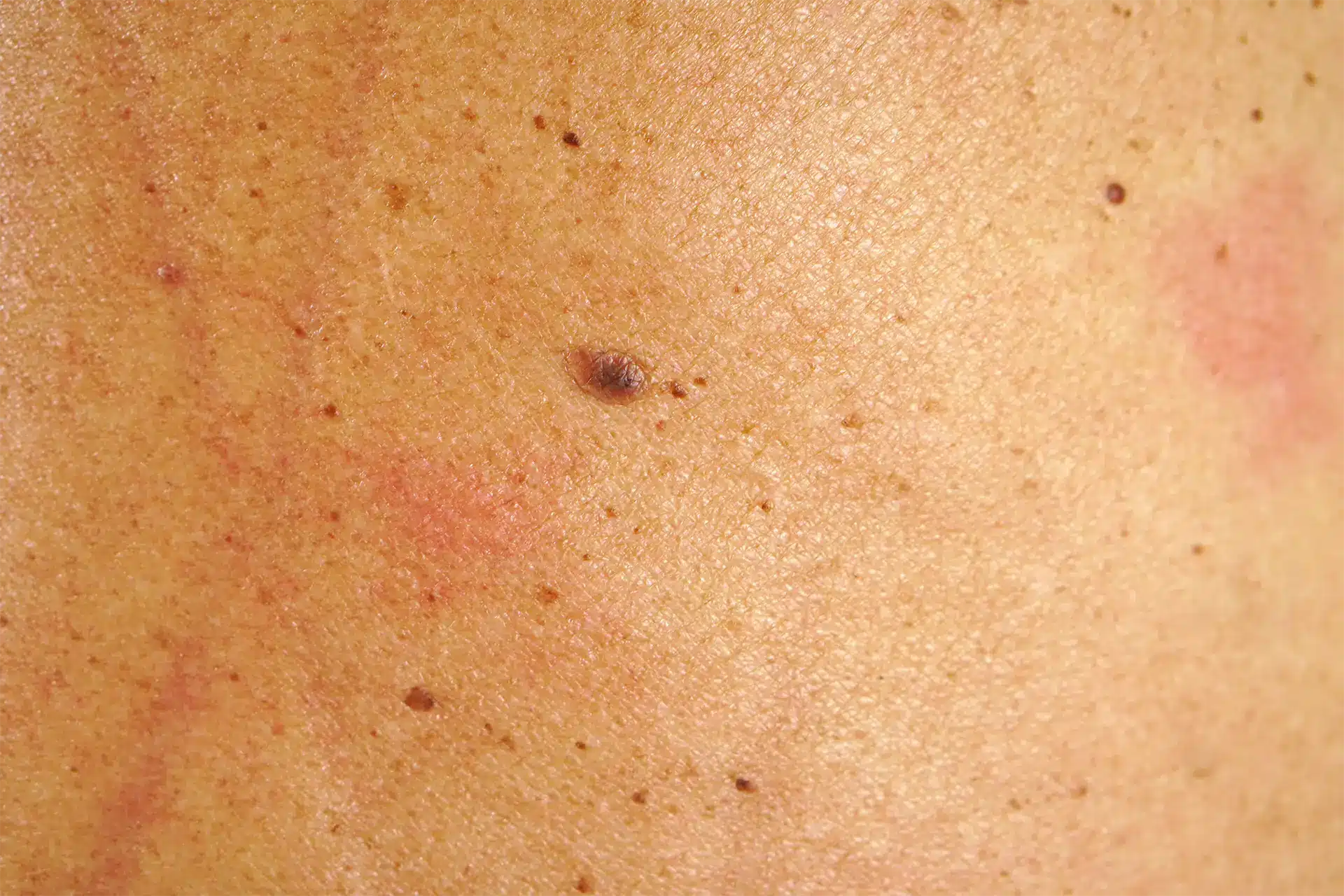
We typically classify moles into several categories based on how and when they develop, as well as how they appear on the skin.
This is what most people develop during childhood or early adulthood. These moles are usually small, round, and evenly coloured. They’re generally harmless, though some get them removed if they’re in a visible spot or cause irritation.
Present from birth, these moles in size and may darken or enlarge as you grow older. Larger ones carry a slightly higher risk of turning cancerous, so you need to monitor this regularly.
These moles may be larger, have uneven borders, or show more than one colour. While not cancerous by default, they can resemble melanoma, so you also need to watch them closely.
These moles are surrounded by a ring of lighter skin. They usually occur in children or young adults and are generally harmless, though the appearance can cause cosmetic concern.
Often pink or reddish, these raised moles can appear suddenly and resemble melanoma under the microscope. Because of this similarity, you may be advised to get a surgical excision for diagnosis and removal.
Moles look different from one another. Some lie flat against the skin, while others are slightly raised. They may be evenly brown, skin-coloured, pink, or even appear blue or black. A few have fine hairs growing through them. These variations are usually normal.
What matters more are changes over time. At DermAlly, our dermatologists use the A-B-C-D-E rule to flag features that may suggest melanoma:
If you notice any of these warning signs, you should get your mole reviewed promptly. Early detection allows suspicious growths to be assessed and treated before they progress further. Speak to our dermatologists today.
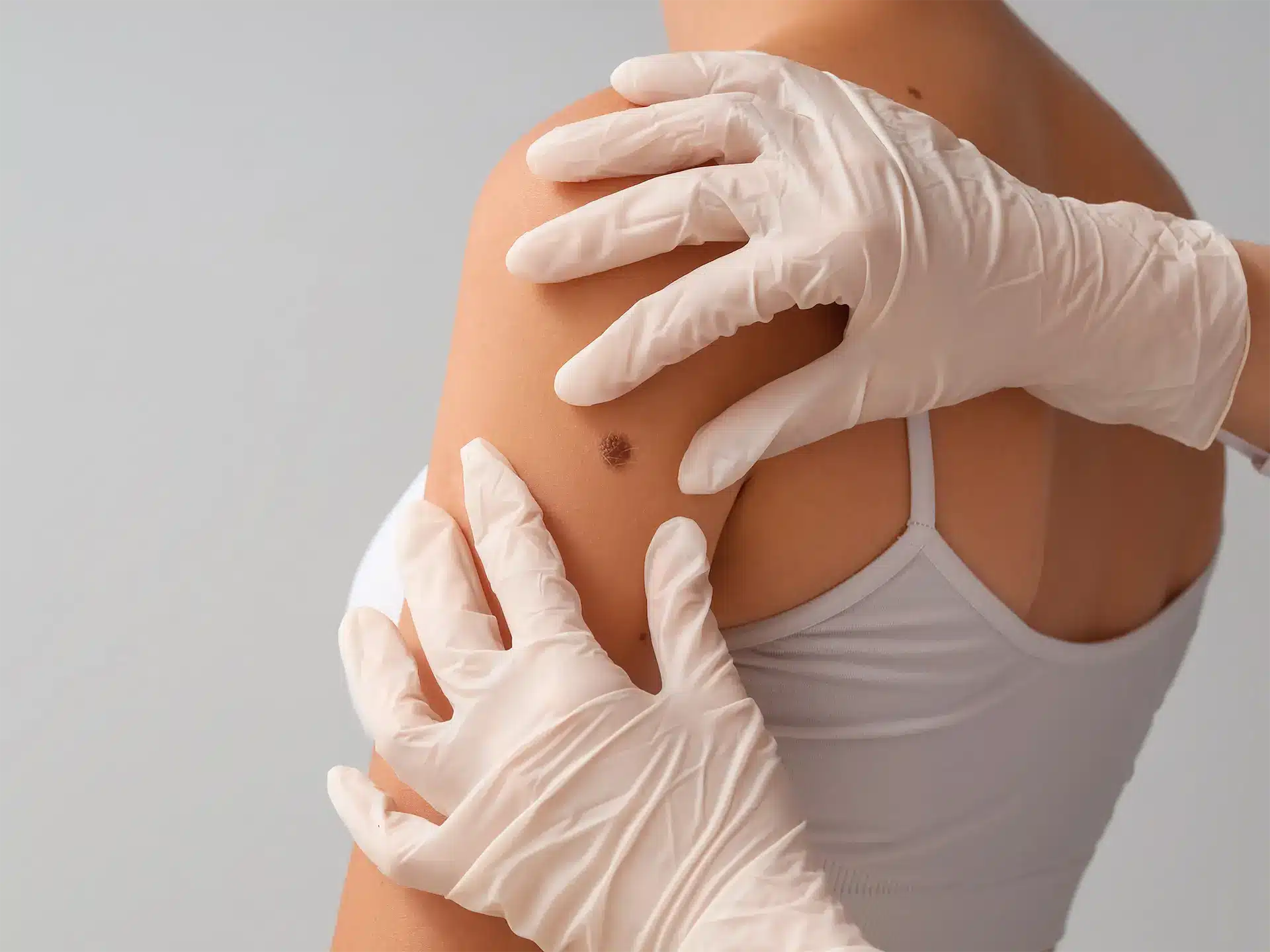
Not every mole needs to be treated by a dermatologist, but there are situations where an in-clinic removal makes sense.
A mole that darkens, grows larger, develops uneven edges, or starts to itch or bleed should be assessed by a dermatologist. While not every irregular mole is cancerous, the only way to be certain is through proper examination and, if needed, removal. Detecting problems early makes any treatment more effective.
Raised moles can catch on everyday clothing and accessories, such as bra straps, waistbands, collars, or watch bands. They may also be accidentally nicked during shaving, particularly around the jawline. Repeated friction or injury can cause bleeding or infection, and getting moles removed prevents these ongoing issues.
The most important reason for mole removal is to rule out melanoma, a serious form of skin cancer. We look for features that suggest the need for closer examination, such as irregular borders, uneven colour, rapid growth, or bleeding.
Whether for appearance, comfort, or peace of mind, mole removal is a standard procedure to minimise scarring and bring back your confidence. At DermAlly, our dermatologists assess your skin to determine the right treatment option for you.
Treatment is matched to the type of mole you have. A small flat spot can be treated differently from a raised or irregular one. Where a biopsy is needed, the approach changes again. Knowing the differences helps explain why pico laser, shaving, or surgical excision may be recommended.
The cost of a mole removal procedure depends on the technique used, the size and depth of the mole, whether stitches are needed, and if a biopsy is required. Here are the typical ranges you can expect:
| Treatment Option | Typical Cost (SGD) | When It’s Used | Biopsy Possible | MediSave Claimable |
| Pico Laser Removal | $800-$1,200, with free one-time touch-up within 3 months | Small, flat, superficial moles for cosmetic removal | ✗ | ✗ |
| Shave Excision | Clinic-specific | Raised, non-cancerous moles that protrude from the skin | ✓ (in some cases) | ✗ (unless suspicious) |
| Surgical Excision | Clinic-specific | Larger, deeper, or suspicious moles requiring testing | ✓ | ✓ (if cancer-suspect) |
Moles removed purely for cosmetic reasons are not claimable under MediSave or insurance. However, if it’s removed because doctors suspect it can be skin cancer, you may be able to claim from your MediSave or insurance.

Is mole removal safe? Every medical procedure carries risks, and this is no different. Here are the risks and side effects to consider:
Attempting removal in non-medical settings, such as beauty salons, also carries risks: infection, poor wound healing, or missing an early sign of skin cancer. Speak to our dermatologists to have your mole properly assessed
After mole removal, you can return to your daily routine, though the treated area needs time to close, heal, and fade. Each method has a slightly different downtime and recovery process.
Good aftercare is usually straightforward. We’ll give you clear instructions to keep scarring to a minimum, based on the treatment you received.
In Singapore, mole removal procedures should always be performed in a clinic licensed by the Ministry of Health (MOH) and supervised by dermatologists registered with the Singapore Medical Council (SMC). This ensures that your mole is properly assessed before removal, and that the method chosen is appropriate for both your skin and your health.
When comparing clinics, you should consider:
While General Practitioners (GPs) or aesthetic doctors may offer removal, dermatologists have the training to manage both cosmetic and cancer-related concerns.
Suspicious moles should not be pico lasered away without examination. A proper clinic should offer surgical excision and biopsy, so the mole can be tested in a laboratory if needed.
Advertising restrictions mean you won’t find before-and-after mole removal photos online. Reputable clinics will share examples only during a consultation.
At DermAlly, we provide both cosmetic removal for unwanted moles and medical evaluation for suspicious ones. Every procedure is dermatologist-led, so you can be confident that your skin is cared for with both appearance and health in mind.

Consultant Dermatologist
MBBS (Singapore), MRCS (Edinburgh), FAMS (Dermatology)
Dr Liu specialises in general dermatology, dermatologic surgery, aesthetic dermatology, and women’s dermatology. She previously practised at the National Skin Centre, where she also oversaw the women’s clinic, and has taught future doctors at NUS and Lee Kong Chian School of Medicine.

Dermatologist
MBBS (Singapore), MRCP (UK), M.Med (Int. Med), FAMS (Dermatology)
Dr Heng has special interests in eczema, skin cancers, dermatologic surgery, cosmetic dermatology, and lasers. She was part of the dermatologic surgery and laser team at the National Skin Centre, and continues as a Visiting Consultant. She has also taught at NUS, Duke-NUS, and NTU’s Lee Kong Chian School of Medicine.
At DermAlly, mole removal is a quick in-clinic procedure, tailored to your skin type and the nature of your mole. Our dermatologists guide you through the options, from pico laser to surgical excision, and provide aftercare instructions for a complete recovery.
If you’ve been thinking about removing a mole — whether it bothers you in daily life, affects your confidence, or raises questions about skin cancer — we’re here to help you find clarity and the right treatment plan.
Surgical excision is permanent, but there’s a chance of recurrence with pico laser removal or shave excision. Hence, at Dermally, we do offer a one-time touch-up within 3 months for pico laser mole removal sessions.
Local anaesthesia is typically administered before the procedure begins, so you won’t feel any pain during the procedure.
A mole removal procedure usually takes less than 30 minutes.
Moles can grow back if you don’t get them surgically removed.
Yes, a small mark is expected. A laser usually leaves faint spots, while surgical excision leaves a fine line that fades with time.
Mole removal done for cosmetic reasons is not covered by MediSave. Coverage only applies if the mole is suspected to be skin cancer and requires a biopsy.
You should be concerned about a mole if it looks different from your other moles, or if it changes in size, colour, or shape. Bleeding or itching are also red flags, since they may point to melanoma.
Book an appointment with our expert dermatologists. Please select your preferred clinic below.
